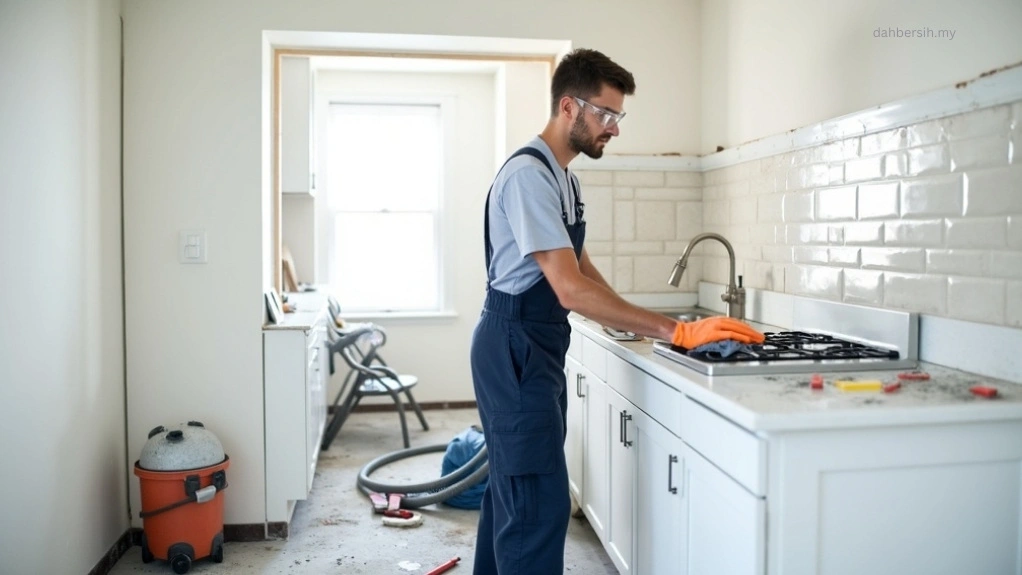
How to Prepare Your Home for a Post-Reno Deep Clean
Start by evaluating every area for dust, stains, and leftover debris, making a checklist of problem spots.
Gather gloves, masks, microfiber cloths, and a HEPA vacuum to trap fine particles safely. Move or protect valuables and cover delicate surfaces before you begin. Open windows and use fans to ventilate the space and clear the air. Begin by removing large debris and vacuuming hidden dust in corners, vents, and behind appliances.
With Dah Bersih, you’ll learn exactly how to tackle each area efficiently.
Post-Renovation Cleaning: Key Points
- Walk through the renovated area to identify dust, debris, and problem spots needing special attention.
- Gather essential cleaning supplies, including HEPA vacuums, microfiber cloths, gloves, masks, and appropriate cleaning solutions.
- Protect furniture, fixtures, and delicate surfaces with plastic sheeting or drop cloths secured by painter’s tape.
- Open windows and use fans or air purifiers to ventilate and clear out dust and fumes.
- Remove large debris and hidden dust from floors, vents, behind furniture, and inside cabinets before detailed cleaning.
Table of Contents
Assess the Scope of Cleanup Needed
Before you plunge into cleaning, take time to thoroughly assess the area that’s been renovated. Walk through the space and carefully scan for heavy dust, debris piles, or problem spots like paint splatters and adhesive residue.
Make note of stubborn stains or buildup that’ll need extra attention. Create a checklist of all surfaces, fixtures, and hidden places, don’t forget air vents, ceiling corners, and spots behind appliances or furniture.
Determine what types of residues are present. Drywall dust, for example, calls for different cleaning techniques than paint drips or leftover adhesives.
Examine each wall, floor, and fixture to gauge their condition and decide if they need gentle wiping, vacuuming, or a specialised cleaning solution.
Evaluate how much debris or leftover construction material remains. Planning for proper removal and disposal before cleaning will help protect your health and prevent spreading dust or chemicals throughout your home.
Gather Essential Cleaning Supplies
Once you’ve assessed the mess, focus on gathering the right cleaning supplies to tackle post-renovation dust and debris safely. Start with personal protective equipment: pick up gloves, masks, and goggles to shield yourself from dust, chemicals, and debris.
Next, choose high-quality microfiber cloths and dusters, these trap fine dust without scratching your new finishes. For floors and upholstery, use a heavy-duty vacuum with a HEPA filter, like the Karcher Wet & Dry Vacuum, which is designed for capturing even the smallest particles.
Select cleaning solutions tailored to the job. Stock up on all-purpose cleaners, disinfectants, and gentle solvents for tackling paint splatters or sticky residues. Equip yourself with a variety of brushes, sponges, and spray bottles for scrubbing hard-to-reach spots and stubborn stains.
Protect Furnishings and Delicate Surfaces
With your cleaning supplies ready, focus on safeguarding your furnishings and delicate surfaces from dust and potential damage. Begin by covering furniture, fixtures, and fragile surfaces with plastic sheeting or drop cloths. Use painter’s tape to secure these coverings around the edges, making sure they won won’t shift during cleaning. This barrier protects against dust, paint splatters, and accidental chemical contact.
Next, remove or carefully store any valuable or sensitive items in a safe, dust-free space. Don’t risk exposing them to debris or cleaning agents that could cause harm. Place protective pads or blankets under heavy furniture before moving or cleaning around them, this step prevents scratches and dents on your floors and other surfaces.
For surfaces like marble or hardwood, consider sealing or gently cleaning them first. This added layer shields them from moisture and harsh cleaning products, helping you avoid discoloration or lasting damage during your post-renovation deep clean.
Ventilate and Clear the Air
After covering and protecting your furnishings, prioritise clearing the air to minimise health risks from lingering dust and fumes. Start by opening all windows and exterior doors to create cross-ventilation, this quickly dilutes airborne dust and helps any residual fumes escape.
Next, use portable fans aimed toward open windows or doors to boost airflow and speed up the removal of odors from paint, adhesives, and cleaning products.
Don’t forget to turn on exhaust fans in kitchens and bathrooms; these help expel lingering contaminants and further refresh the indoor environment.
If you have one, set up an air purifier with a HEPA filter in the main renovation area to trap fine particles and improve air quality.
Allow several hours for this ventilation process, both before and after your deep clean. This step-by-step approach protects your lungs and ensures your home is safer and fresher before you tackle the next cleaning phase.
Remove Large Debris and Hidden Dust
Even though ventilation helps clear the air, there’s still plenty of dust and debris that settles on surfaces and in hidden corners. Start by sweeping or vacuuming all floors to remove loose dirt and large debris. Use a heavy-duty broom or a vacuum with a HEPA filter to capture fine dust that regular vacuums might miss.
Next, scan the room carefully, don’t forget to check behind furniture, under fixtures, or inside cabinets for hidden dust and small debris.
Remove any large leftover materials, such as packaging, scrap wood, or construction waste before you move on to detailed cleaning. Pay extra attention to air vents, behind appliances, and other less obvious spots where dust can accumulate.
Thorough debris removal not only makes the deep cleaning process more efficient but also helps protect your health by reducing the chance of inhaling lingering construction particles. Work methodically and use protective gloves and masks for safety.
Practical Takeaways for Post-Renovation Cleaning
Ready to turn your newly renovated house into a healthy, welcoming home?
By prepping carefully, clearing clutter, gathering supplies, and protecting your investment, you’ll make your deep clean smoother and safer.
Isn’t it worth a little extra effort to guarantee your beautiful upgrades shine and your living space feels truly fresh? Follow these practical steps, and you’ll be breathing easier and enjoying your spotless, move-in-ready space in no time.
Happy cleaning, it’s almost time to settle in!
Frequently Asked Questions About Home Cleaning After Renovation
How to Prep a House for Deep Cleaning?
Start by removing clutter and personal items. Open windows to improve ventilation. Gather all necessary cleaning supplies. Protect delicate surfaces with coverings, and wear gloves and masks for safety.
How to Deep Clean a House After Renovation?
Remove all debris first. Dust every surface, including ceilings, light fixtures, and vents. Use a HEPA-filter vacuum for thorough dust removal, then mop floors. Keep windows open for ventilation and wear protective gear.
Is Deep Cleaning Necessary After Renovation?
Yes. Renovation work leaves fine dust and debris that can affect health and damage surfaces. Cleaning vents, wiping hidden areas, and thoroughly washing all surfaces helps prevent allergies and maintain finishes.
What Is Post Construction Deep Cleaning?
It is a detailed cleaning process done after building or renovation work. It involves removing dust, debris, and residue from all surfaces, sanitising, and ensuring proper ventilation for a safe and clean environment.